UV Protection
Helps shield aging asphalt from the intense sunlight that accelerates oxidation throughout Arizona.
Protect your commercial asphalt investment with professional slurry seal services from Camelback Paving, Inc. We help Phoenix businesses preserve structurally sound pavement, slow surface deterioration, restore appearance, and reduce the likelihood of more costly repairs.
Commercial asphalt is a major property investment, and like any investment, it performs best when it is maintained before serious deterioration develops.
Camelback Paving, Inc. provides commercial slurry seal services for shopping centers, apartment complexes, office parks, industrial facilities, schools, healthcare properties, municipal surfaces, and other high-use pavement throughout the Phoenix area.
Unlike reconstruction or major overlay work, slurry seal is intended for pavement that remains structurally sound but has begun showing surface wear. Applying the treatment at the proper stage can slow deterioration, improve appearance, and help property owners postpone more extensive rehabilitation.
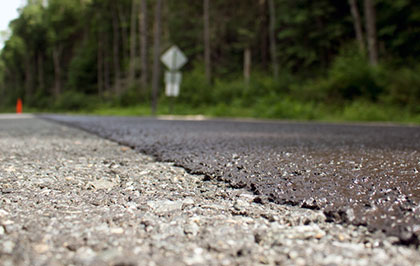
Slurry seal adds a new aggregate-rich wearing surface over existing asphalt to help protect the pavement from environmental exposure and everyday commercial traffic.
Helps shield aging asphalt from the intense sunlight that accelerates oxidation throughout Arizona.
Seals minor surface voids and helps reduce opportunities for water to reach vulnerable pavement layers.
Fine aggregate improves pavement texture and can help restore traction to aging commercial surfaces.
Preserving pavement earlier can help delay overlays, major repairs, and complete reconstruction.
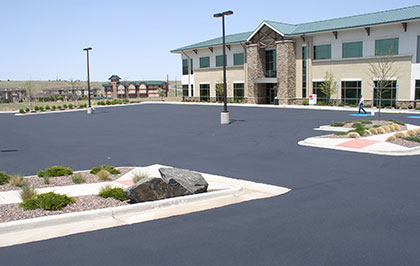
Slurry seal is a preventative pavement-preservation treatment made from asphalt emulsion, fine aggregate, mineral fillers, water, and specialized additives.
The mixture is blended before application and distributed evenly across the existing pavement, creating a new protective wearing surface over structurally sound asphalt.
While conventional sealcoating primarily protects the existing asphalt surface, slurry seal contains significantly more aggregate. That aggregate creates additional texture, provides a more substantial wearing course, and helps the finished surface withstand everyday commercial use.
Phoenix pavement operates in an especially demanding environment. Intense ultraviolet exposure, extreme surface temperatures, monsoon moisture, and constant commercial traffic can accelerate the aging process of asphalt.
Over time, the asphalt binder holding the aggregate together begins to oxidize. The pavement gradually becomes drier, less flexible, and more brittle. As that process advances, small cracks, surface raveling, fading, and texture loss can begin to develop.
Once cracking allows water beneath the surface, moisture can affect underlying pavement layers and contribute to more significant failures. Slurry seal is intended to interrupt this progression before those structural problems become widespread.
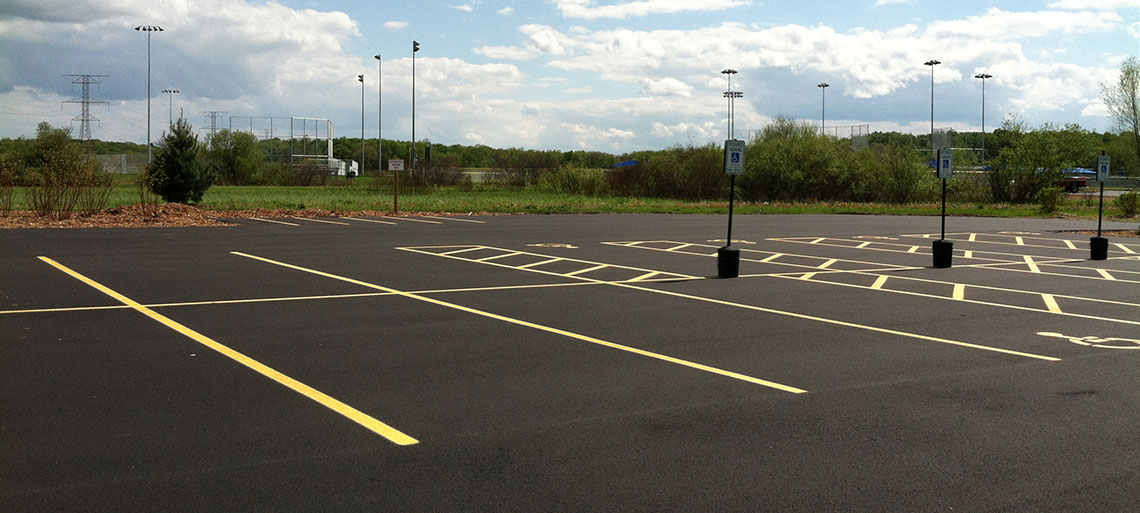
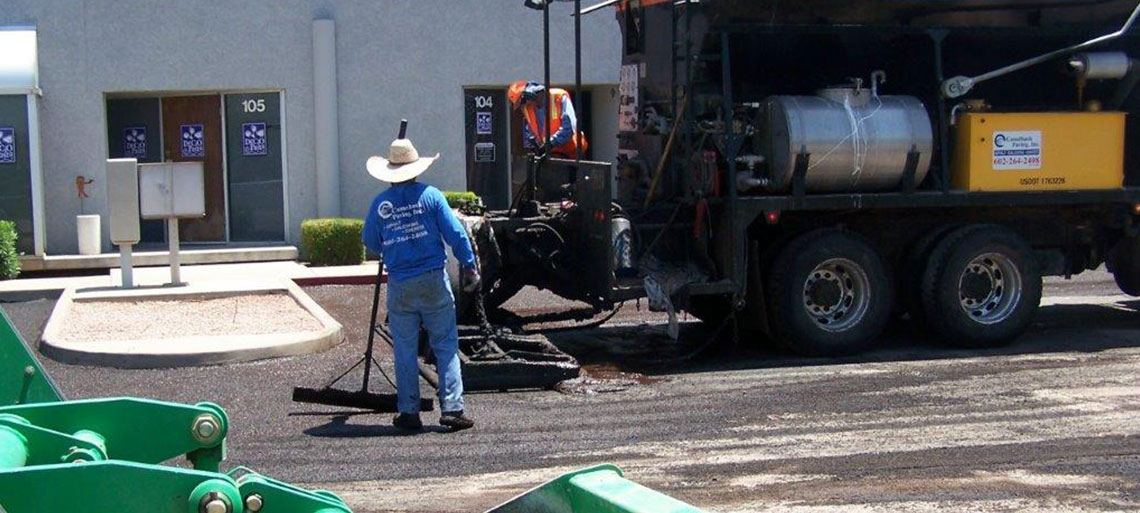
The asphalt emulsion acts as the binder that holds the fine aggregate together. After the slurry is placed, water begins evaporating and the emulsion breaks, allowing the asphalt binder to bond the aggregate into a continuous surface.
The aggregate is not merely filler. It helps restore surface texture, improve skid resistance, and protect the original pavement from direct sunlight and tire wear.
Mineral fillers and other additives can influence mixing, curing, and overall performance. Once cured, the finished treatment retains enough flexibility to respond to normal pavement movement associated with temperature changes.
Slurry seal is generally most effective when the existing asphalt remains structurally sound but is beginning to show early surface deterioration.
It is not intended to correct widespread base failure, severe settlement, extensive alligator cracking, or large structural potholes. Those conditions may require repair before a preservation treatment is considered.
Camelback Paving, Inc. begins with a professional pavement evaluation so the recommended treatment is based on the actual condition of the property.
Asphalt has begun fading and drying but remains structurally serviceable.
Small surface cracks are appearing without widespread structural failure.
The pavement surface has become smoother and shows visible age or everyday wear.
Fine surface aggregate is beginning to loosen while the pavement remains fundamentally intact.
Surface wear has reduced texture in parking, driving, or maneuvering areas.
The parking lot looks weathered and worn even though major reconstruction is not yet necessary.
Proper preparation matters just as much as the slurry material itself. Each project begins by understanding the pavement, repairing appropriate problem areas, and preparing the surface for reliable adhesion.
We evaluate asphalt condition, traffic patterns, drainage, cracking, and damaged areas to determine whether slurry seal is appropriate for the property.
Dirt, vegetation, debris, loose aggregate, and contaminants are removed. Necessary crack sealing or localized repairs are completed before slurry application.
Asphalt emulsion, aggregate, mineral filler, water, and additives are mixed in controlled proportions and spread evenly across the pavement.
The treatment cures as moisture leaves the mixture and the emulsion bonds the new surface together. Traffic is restored after adequate curing based on site and weather conditions.
Both treatments can help protect asphalt, but they serve different purposes and provide different levels of surface renewal.
Slurry seal incorporates fine aggregate into the treatment, creating a thicker wearing surface suited to pavement that needs additional texture and surface renewal.
Traditional sealcoating provides a protective coating over asphalt and can be appropriate when the primary goal is surface protection and cosmetic renewal.
Pavement preservation is about keeping structurally sound asphalt in service longer rather than waiting until reconstruction becomes unavoidable.
Protecting asphalt from oxidation and moisture can slow the progression of surface wear.
Preventative treatment can help delay more expensive overlays, patching, and reconstruction.
Restoring pavement texture can improve traction and create a more uniform commercial driving surface.
A darker, more uniform pavement surface creates a cleaner appearance for customers, tenants, and visitors.
Extending existing pavement life can reduce the amount of material and construction activity associated with early replacement.
Pavement-preservation work is typically less disruptive than full-depth reconstruction or complete resurfacing.
Every commercial property has different traffic patterns, maintenance needs, operational schedules, and budget considerations. Camelback Paving, Inc. evaluates those conditions before recommending a pavement-preservation strategy.
Our goal is not simply to apply a treatment and move to the next project. We help property owners preserve pavement before minor deterioration becomes expensive structural damage.
Whenever practical, project scheduling can be coordinated around business operations to help reduce interruption to customers, residents, employees, and normal vehicle traffic.
Camelback Paving, Inc. provides commercial slurry seal and pavement-maintenance services throughout Phoenix and surrounding communities.
From individual commercial parking lots to larger multi-property facilities, our team can evaluate the pavement and recommend a preservation strategy based on its current condition.
If your pavement is fading, losing texture, developing minor cracks, or beginning to show the early stages of surface deterioration, now may be the right time to consider preventative pavement preservation.
Schedule a Pavement Evaluation